

Ah, Boyle. He begins, does he not, with the contingent encounter in the subterranean labyrinth – the Roma woman's plea, the Viennese couple's eruption of ressentiment. A perfect tableau, is it not? The very unplanned nature of the event, he insists, screams "autonomy!" But let us not be so hasty to celebrate this spontaneous generosity. For within this seemingly simple act of charitable giving, doesn't the specter of the Other – the devalued, the "worthless" Roma – immediately conjure its dialectical shadow? The Viennese couple, in their visceral rejection, are not merely bigoted relics; they are the truth of the liberal subject who can only bestow charity upon a properly constituted victim, one whose suffering confirms their own moral superiority. The Roma woman, in their eyes, fails to perform this role adequately.
And then, the masterstroke! Our colleague, in a gesture so perversely logical it borders on the sublime, offers another Euro to the very agents of this exclusionary outburst. This, Boyle correctly identifies as "cognitive dissonance." But is it not more than that? It is the irruption of the Real into the symbolic order of their prejudice. By offering them the same token of supposed worth, she exposes the arbitrary nature of their valuation, the underlying anxiety of their own perceived deprivation. They cannot comprehend this gesture because it dismantles the very scaffolding of their identity, built upon the exclusion of the Other. Their "not having had it easy" – a vague, generalized suffering – becomes the very justification for their lack, a lack they desperately project onto the Roma woman.
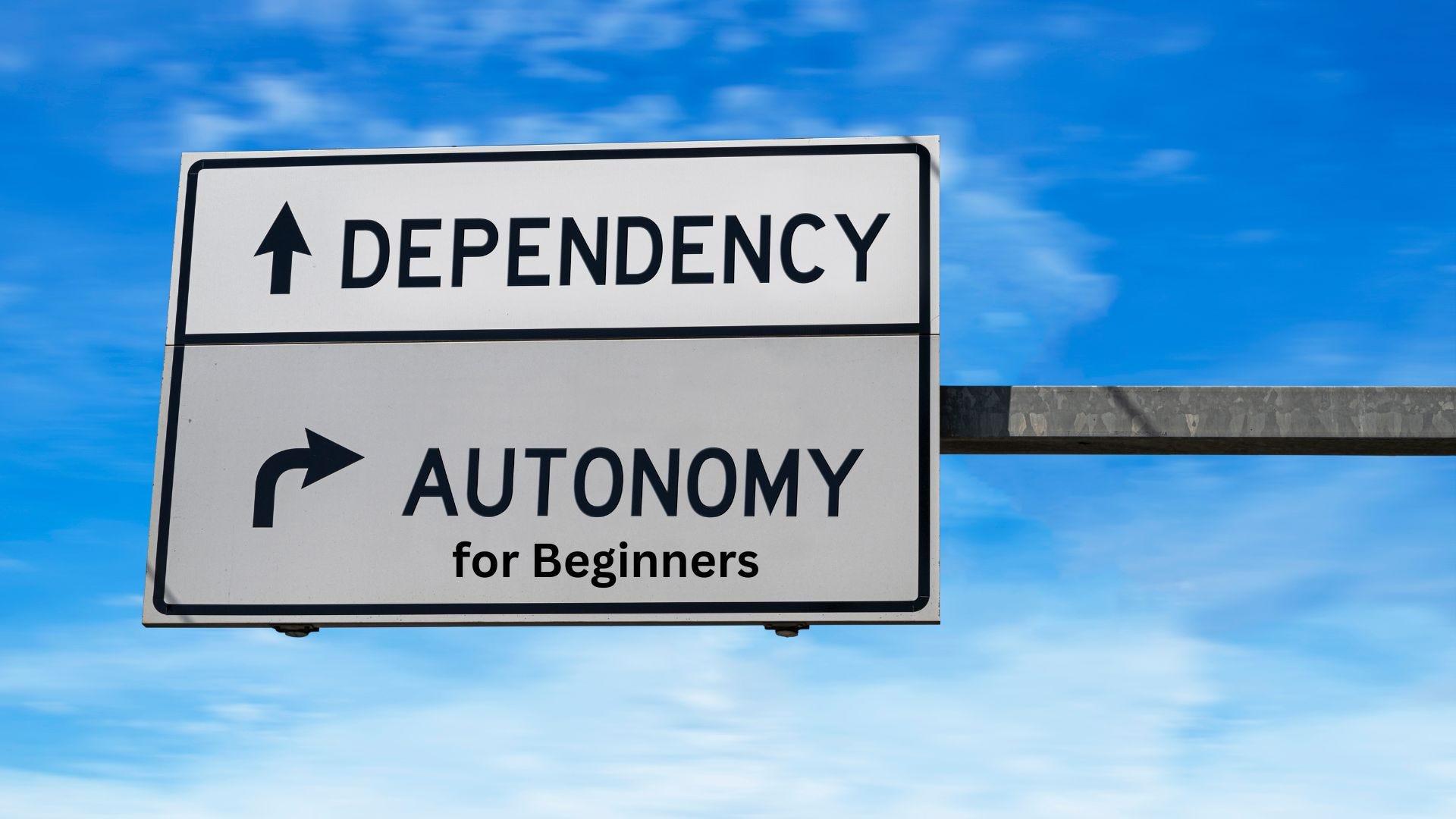
Boyle then stumbles into the quagmire of "autonomy" itself, offering a definition as slippery as an eel in a barrel of schnapps: the ability to do things on your own, fueled by faith and initiative. But what is this "on your own"? Is it not always already within a symbolic order, a network of social norms and expectations that subtly, or not so subtly, dictate the very possibility of our actions? To speak of pure, unadulterated autonomy is a naive fantasy, a pre-Oedipal yearning for a self untouched by the Law of the Father, the societal Big Other.
The anecdote of the daughter at the post office, with her precocious diagnosis of the demeaning bureaucrat's empty existence, is particularly telling. The child, not yet fully inducted into the symbolic castration of social norms, speaks with a Lacanian jouissance, a directness that adults, burdened by the superego's incessant demands, can only dream of. "He probably hasn't experienced anything in his life and probably never will." A brutal, almost terrifyingly accurate assessment. We adults, however, are far too busy performing our assigned roles within the bureaucratic machine to utter such truths.
And here Boyle touches upon the festering wound of education. Not a liberating force, but a mechanism of conformance, a factory churning out compliant cogs for the capitalist machine, a legacy of Bismarck's fear of the "socialist barbarians." The dualism of "right" and "wrong" instilled from a tender age serves not to foster critical thinking, but to preempt it, to create subjects who passively accept pre-ordained answers. The "conformance Kool-Aid," as Boyle so aptly puts it, is the very substance of our alienation, the slow poisoning of our inherent capacity for autonomous thought.
The predictable trajectory then unfolds: the forced choice of a major, the asinine question of "what are you going to do with that?", the eventual realization that one's studies are often irrelevant to the demands of the labor market. We are trapped in a loop of non-choices, a career path dictated by happenstance rather than genuine desire. And the ultimate horror: the moment of redundancy, the realization that the very skill set that defined one's existence is no longer required, leaving the individual feeling "worthless." This, Boyle insists, is the societal norm, a collective descent into despair fueled by the fear of the Other's gain, a mirror image of the Viennese couple's outburst.
But Boyle, in his earnest American optimism, seeks a way out. "What is the worst thing that can happen?" he asks, as if the abyss of existential angst can be neatly sidestepped with a cost-benefit analysis. "Small bets," he suggests, as if our very being can be commodified and strategically invested. These are the palliative measures of a subject who, while recognizing the symptoms of our societal malaise, still clings to the illusion of individual agency within a fundamentally flawed system.
His concept of "positive risks" – unplanned events embraced as opportunities – reveals a certain fetishization of the contingent, a refusal to acknowledge the underlying structural forces that shape the very terrain upon which these "risks" unfold. The colleague's spontaneous generosity, again, becomes the exemplary act, a fleeting moment of ethical singularity that risks obscuring the systemic inequalities that necessitate such acts in the first place.
The detour into the trauma of the 100-year-olds – the father's worthlessness, the dog shot by the Czechs – is a poignant reminder of the enduring power of the Real, the traumatic kernel that resists symbolic integration. These obsessions, these frozen moments of suffering, reveal the fragility of our constructed narratives, the way in which historical trauma can continue to haunt the individual psyche, preventing a genuine engagement with the present.
Ultimately, Boyle's call for a "complete new narrative" and the raising of "awareness" feels somewhat… insufficient. While the recognition of our conditioned state is a necessary first step, the path to genuine autonomy is not merely a matter of conscious decision or positive thinking. It requires a radical questioning of the very symbolic order that shapes our desires and limits our possibilities. It demands a confrontation with the obscene underside of our social reality, the underlying anxieties and prejudices that manifest in the Viennese couple's outburst and the systemic inequalities that perpetuate feelings of deprivation.
The curiosity, the "can I do this?" that Boyle identifies as his core motivation, is not inherently revolutionary. It can be easily co-opted by the capitalist imperative to constantly innovate and exploit new frontiers. True autonomy, then, lies not in simply doing things on our own, but in critically examining why we do them, and within what ideological framework our actions are inscribed. Perhaps, for beginners, the first step towards autonomy is not to act, but to question – to relentlessly interrogate the seemingly self-evident truths that bind us. Only then can we begin to glimpse the possibility of a truly tipping point, a radical break from the ingrained patterns of our societal despair.