

A persistent question has been haunting me: what's the fundamental logic behind my way of embracing life? I sense an inherent organization, a subtle methodology at play, but it dances just beyond the reach of conscious articulation. We sense the presence of something, an order, but articulating it feels like trying to catch smoke.
Then I encountered the work of Frithjof Bergmann, and a few pieces of the puzzle clicked into place. Bergmann's observations in "The Diversity of Death" resonate deeply, particularly his reflection on how we often avoid the topic of death as if it were a singular, monolithic entity. His revelation that people die as they live struck me with the force of undeniable truth. It's a simple statement, yet it contains a universe of implications.
This idea of dying as you live makes me think of the concept interpretive wheel. Imagine a wheel constantly turning, with each rotation representing our journey through life. On one side, we have the holistic view, the wide-angle lens that takes in the entirety of our existence, with all its complexities and contradictions. On the other side, there's the reductionist perspective, the urge to break things down into smaller, more manageable parts, to categorize and define.
As the wheel turns, we move back and forth between these two viewpoints. But here's the crucial point: no two turns of the wheel are ever the same. We have more knowledge today than we did yesterday, more experiences etched into our memories, more connections forged. Each rotation is influenced by the ever-accumulating weight of our personal history.
This brings up a critical question: does this accumulated knowledge help or hinder us? If knowledge becomes a form of trauma, something we bury deep within ourselves, it can fester and warp our perception. We try to hide it, deny its existence, but like a persistent shadow, it eventually catches up with us, influencing our choices and coloring our world view.
However, if we choose to embrace knowledge as a tool for growth, as a conduit for understanding, it can become the very foundation upon which we build our lives. Each new piece of information, each hard-earned lesson, adds depth and nuance to our personal narrative.
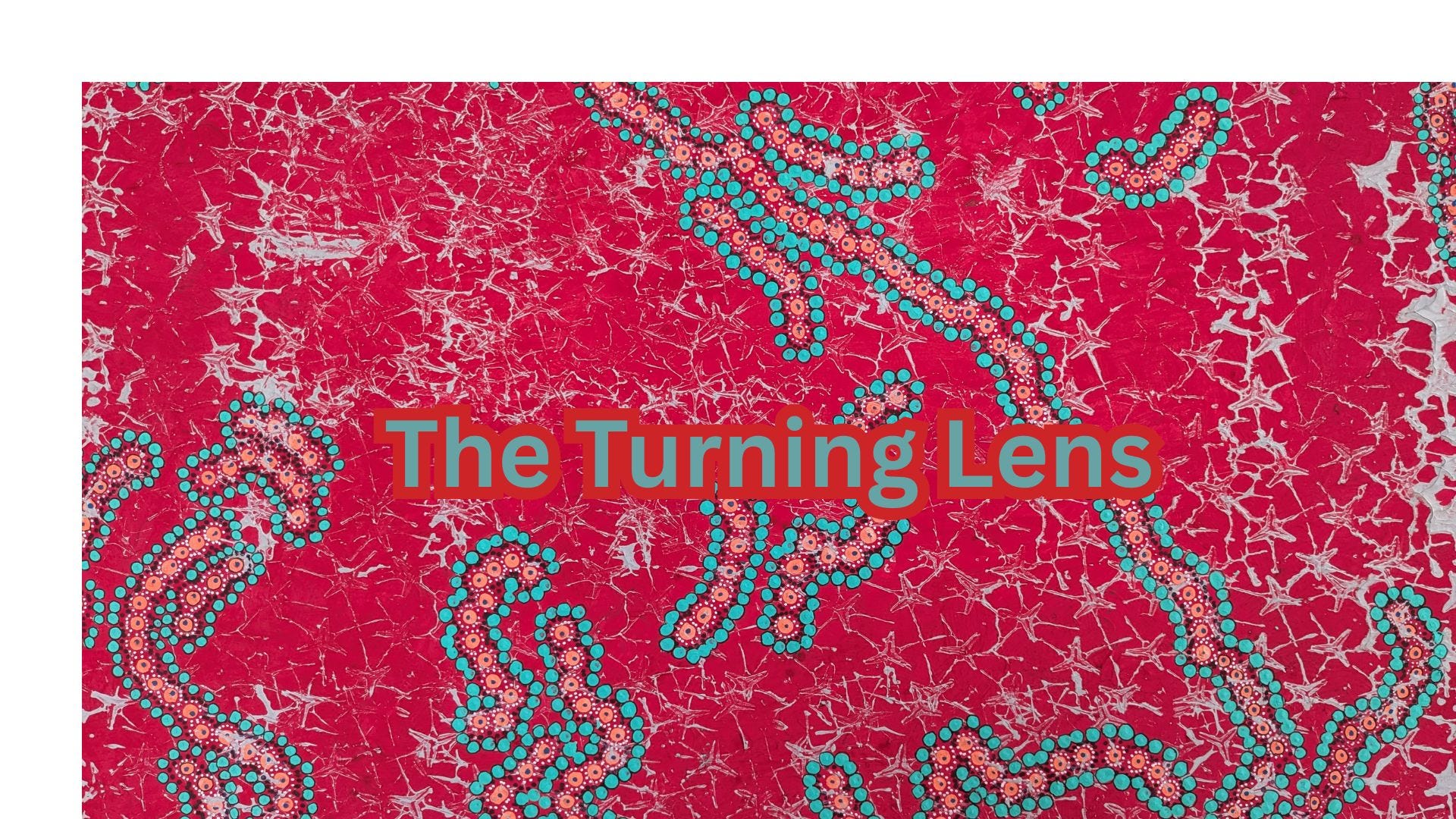
This resonates deeply with my own experience as a painter.
When I stand before a canvas, I'm constantly engaged in a dialogue with the work in progress. Is it too light, too dark? Too busy, too sparse? Am I happy with the color scheme, the imagery I'm attempting to convey?
Each brushstroke is an act of interpretation, a decision that influences the overall composition. Some days, the paint flows effortlessly, and the colors sing in harmony. Other days, it's a battle against the resistance of the medium, a struggle to translate the vision in my mind's eye onto the canvas.
But here's the beauty of it: I realize that I approach each day as a painting in progress. Just as the canvas evolves with each layer of paint, so too does my understanding of myself and the world around me. I couldn't have painted yesterday what I can create today. The experiences, the knowledge, the very act of living – all contribute to the richness and complexity of the final piece.
And like Bergmann suggests, the way we live each day, the colors we choose, the strokes we make, ultimately shapes the way we face our own finitude.