

The Messy Truth About the “Great Outdoors”
“The ‘benefit’ of having spotted owls is defined in terms of how many people visit the forest, how many will seea spotted owl, and what’s it worth to them to see a spotted owl, et cetera. It’s all the greatest rubbish. This type of environmental cost-benefit analysis makes it seem as though we’re in front of the shop window of nature looking in, and saying, ‘Yes, we want this, or this, or this, ’ but we’re not inside, we’re not part of it. So these studies have never appealed to me. By asking only what is good for human beings, they are being presumptuous and arrogant.”
Complexity: The emerging science at the edge of order - M Mitchell Waldrop
From toxic army depots that are now thriving national parks to the strange way we talk about wildlife “crossing borders,” we’re unpacking the reality of the Anthropocene.
In This Episode:
The Arsenal Transformation: I share the fascinating story of the Rocky Mountain Arsenal in Denver—once one of the most polluted places in the U.S., now a 17,000-acre national park where nature converted a former army toxin depot into a scenic escape.
The Fox “Invasion”: We talk about the recent “othering” of wildlife in Austria, where some claim “Czech foxes” are invading our space and devouring sheep because they don’t have “passport control.”
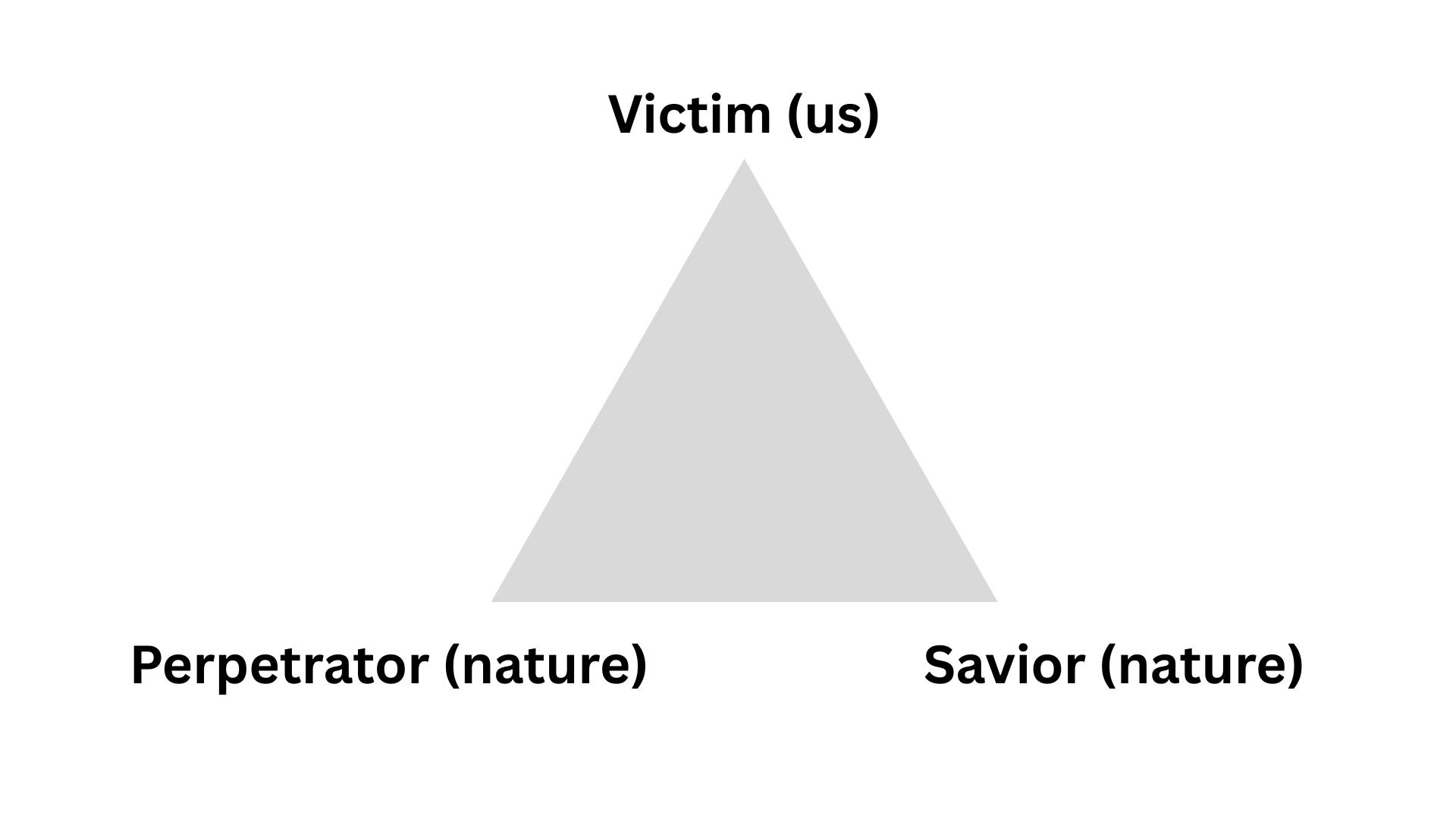
Nature’s Drama Triangle: I introduce a mental model involving the
Victim, Savior, and Perpetrator, explaining how we constantly shift nature between being our healer and a dangerous intruder.
The Trouble With Wilderness: Drawing on the work of William Cronon, I question if “wilderness” truly exists anymore since humans have touched nearly everything. We look at the 1980s tornado at Cathedral Pines and how the drive to “restore” it was often just an attempt to fix a visual mirror of our own making.
National Parks as Art Galleries: I discuss a powerful lecture by laura alice watt on Point Reyes and Yosemite, exploring how we often treat nature like a museum piece that must stay the same to meet the “picture in our heads.”
The Puffin Paradox: A trip to Iceland reminds us how our environmental ethics are often tied to beauty—we protect “cute” puffins while questioning why we eat chickens.
How We See the World
During the show, I break down a five-point scenario to explain how we process our relationship with the environment:
Our Perception: How we believe nature should look.
Triggered Emotions: The feelings those beliefs spark in us.
The Reaction: How those emotions drive our actual behavior.
The Consequences: The real-world impact our decisions have on the planet.
The Absurdity: How our thought processes are often driven by mental models we don’t even realize we have.
The Big Takeaway
I’ve realized we can’t just pretend to be “part of nature” in a passive way. We have to take honest responsibility for how we interact with it. It’s time to move past the “zero-sum game” where either humans or nature wins, and instead focus on a healthy, honest relationship with everything in this cosmos.
Thanks for listening. If these perspectives clicked with you, feel free to subscribe to stay updated on new episodes!
Landscape Preservation and National Parks
Professor Laura Watt talked about the evolution of a national park system and the effort to preserve pristine wilderness. She argued that this approach often obscures the ways humans have already interacted with the land. She also spoke about her research on the Point Reyes National Seashore, which used to be a dairy ranch community before it was designated a national park in the 1960s


