

Unveiling the Chains of Debt ⛓️
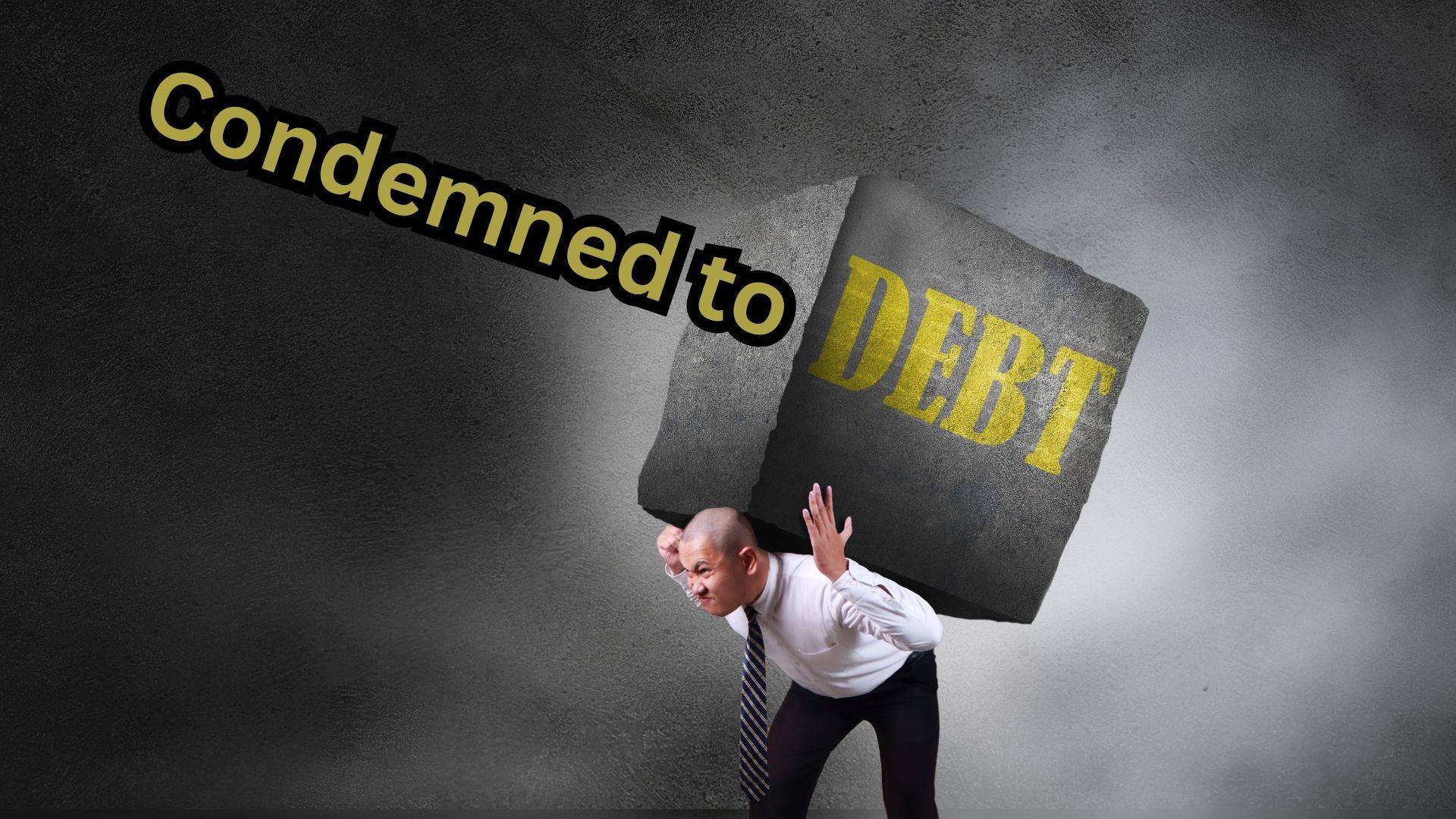
In this episode of Radio Tipping Point, which I titled "Condemned to Debt," I embarked on a deep dive into a subject I've come to realize might be the most crucial one we'll discuss: the pervasive concept of debt. It’s a vehicle, I discovered, that has been used throughout the ages to keep the populace under control, and I wanted to trace its various permutations.
I started our journey by referencing Henry George, an early social economist, who in 1869 claimed that those with a monopoly on land would practically control everyone who had to use it. This set the stage for how deeply ingrained economic disparities are. I then brought in Paolo Pasolini's insights on how conditioning in the school system immediately highlights who is rich and who is poor 🍎💸 – a determination, I noted, that isn't random but often a historical process. We are, after all, born into situations of plenty or, tragically, into the red from day one.
Two Sides of the Economic Divide ⚖️
I then explored these two scenarios: the "silver spoon" individual with no debts and plenty of cash, taught to make more money by investing or lending, thus perpetuating the cycle of wealth 📈. And then, the other side: those born without cash, often with debt already over their heads. From day one, they’re in a hole, forced to borrow just to survive, keeping the cycle running.
My research led me to David Graeber's excellent book, "Debt: The First 5000 Years," which deeply influenced my understanding. Graeber details how debt, and the slavery intrinsically tied to it, shaped various cultures, from ancient Mesopotamia (modern-day Iraq) onwards. It played a crucial role in establishing social structures, bestowing and perpetuating power, all tied to inequality. I even discussed how the leisure of Greek democracy, for example, was only possible due to slavery, which took many forms – even women, though not always called slaves, were in a form of servitude 💔.
I also couldn't overlook the Catholic Church's role in perpetuating inequality, with salvation often placed in the next life unless you had enough cash for "indulgences," a "racket" to collect funds and allow people to "break the rules." This, too, continued the path of slaveholders and the enslaved. 🙏💰
Echoes of the Past: From Haiti to Sharecropping 🇭🇹🌾
Then, I shifted to colonialism and the trans-Atlantic slave trade. I highlighted the pivotal, yet often overlooked, story of Haiti at the end of the 18th century. When enslaved people there repelled their oppressors and declared freedom, it was a "bomb" that exploded during the American Revolution itself, challenging the very idea of "three-fifths of a man." But France, I explained, continued their oppression by demanding a massive "debt" from Haiti for the "loss" of their "assets" – the enslaved people themselves. Other slave-propagating nations supported this, terrified of a similar "payday for injustice." This fear, coupled with a belief in white racial superiority, drove them. 😨
I continued this thread through the US Civil War. Lincoln, I argued, wasn't just aiming to free slaves for a life of equity; he even suggested they return to Africa. As I pointed out, they retorted, "We didn't ask to come here, and we've been here longer than you!" The debt of slavery persisted through sharecropping, where individuals were trapped in a cycle of working off debt with certificates only redeemable at inflated company stores, effectively keeping them enslaved even after official abolition. ⛓️💥
This evolved into colonialism, where colonial powers built infrastructure for their own benefit, then claimed the indigenous populations owed them for it, trapping them in debt from their own land. No matter how hard they toiled, they could never pay it back, ensuring freedom was "never reached." This, I contended, allowed the powers to always win. 🏆
Modern Servitude and the Path Forward ➡️
And it hasn't ended. I drew a direct line to today's global south, where countries receive loans for huge infrastructure projects, then face confiscation of territory when they can't pay. It's "perpetual servitude," I declared. 🌍
I then explored how these "new forms" of servitude are not so new. I stressed the difference between equality and equity, asserting that we are not given the same cards from day one, whether due to parental education, neighborhood, race, or sex. This societal "cosmos" decides where we live on the "tracks," creating a form of inherited "debt." 🛤️
I looked at the US incarceration rates, noting the demographics of those imprisoned and the unequal means by which they are put there. One objective of this "grand creation called debt" is to keep others docile, to prevent them from becoming a threat to the power base, much like the fear sparked by Haiti's rebellion. I tried to put myself, and the listeners, into the shoes of someone facing imminent debt, like not being able to pay rent on the first of the month. The immense stress, the feeling of having "nothing to lose," and the desperate search for an "ingenious solution" that could easily lead to trouble – "straight to jail," I quipped, if you "do not go past go." I emphasized that while "debtors' prison" has been eliminated in name, new forms have revitalized the concept. 😟🚨
I specifically highlighted the debt accumulated from illnesses, where even if a loved one passes away, the debt remains, creating a "vicious circle" that seems impossible to escape through legal means. And then, a modern-day form of slavery I'm grateful we don't face in Austria: student debt. I shared meeting someone with $200,000 in student debt, questioning how she could ever pay it back without being driven solely by that burden. I challenged the argument that student debt is a "privilege," questioning if such a debt could ever be seen that way. 🎓💸
I pointed out the continuity across all these examples: inherited debt, societal structures making freedom virtually impossible, an economic system based on "growth" that demands loads of debt, even personal debt. I shared a sobering statistic: 80% of Indian rural households are in debt, and their agricultural work doesn't even cover it. I even linked this to the Modi government's agricultural reforms, where farmers, feeling they had "nothing to lose," successfully protested. But the underlying condition of debt, I stressed, remains unaddressed, seen as "standard fare," "normal." 🤔
Breaking the Cycle: A Call to Action 🛠️✨
In my concluding thoughts, I pondered how we can break these vicious cycles. I urged listeners to look within their own domains to understand and disrupt these patterns, through debt relief or by dismantling models that no longer serve us. I believe the problem isn't people, but structures. I gave a poignant example with African agriculture, where growing cash crops for our markets perpetuates dependency, suggesting we refuse to buy such products. I also touched on the educational system, where debt is a symptom, urging us to question the value and cost of education itself. 🥕📚
I finished by acknowledging that I wasn't fully aware of how this "vehicle" of debt has been used historically until preparing for the show. But by understanding its past applications, even with different "verbiage," the processes are often the same. I believe that by becoming aware of this condition, and where the problem truly lies, we can find alternate ways. I asserted that we hold the responsibility and the means to create something much better, a wish I extend to all my listeners this week. Stay cool, and I'll be back next week. 🎧🌟


